How to Organize Your Fridge: What Goes on Which Shelf
To organize your fridge, put ready-to-eat food on the upper shelves, leftovers in the middle, and raw meat, poultry and fish on the bottom shelf in a container. Fruit and vegetables go in the crisper drawers, and the door is for condiments only. Eggs and milk belong on a shelf inside the fridge, not in the door.
The short version: top shelves for food you eat without cooking. Bottom shelf for raw meat, on a tray. Drawers for produce. Door for ketchup, mustard, pickles and jam. Keep the fridge at 40°F (4°C) or below, don't pack it so full that air can't move, and throw out old food once a week.
What goes on which shelf
| Zone | What goes there | Why |
|---|---|---|
| Upper shelves | Ready-to-eat food, drinks, milk, cheese | Nothing raw can drip on it |
| Middle shelves | Leftovers and cooked food, eggs in their carton | Easy to see, so it gets eaten |
| Bottom shelf | Raw meat, poultry and fish, in a container | Juices can't drip on other food |
| Crisper drawers | Fruit and vegetables | Humidity suits produce |
| Door | Condiments | Often the warmest spot |
The order comes from one idea: food that won't be cooked again sits above food that will. Ohio State University Extension puts it this way: food in the fridge should be stored top to bottom based on cooking temperatures, with the top for ready-to-eat food and the bottom shelf for raw meat, poultry and seafood.
A note on where this comes from. The USDA's Food Safety and Inspection Service (FSIS) doesn't publish a shelf-by-shelf chart for home fridges. Its Refrigeration and Food Safety page says the whole fridge should be 40°F or below, "so that any place is safe for storage of any food", then adds two placement rules: keep raw meat sealed so its juices can't reach other food, and keep perishable food out of the door. The shelf-by-shelf layout in the table is from University of Illinois Extension, which builds on the same two rules.
Upper shelves: food you eat as it is
Illinois Extension reserves the top shelf for ready-to-eat foods and foods that will not be heated. Its examples are milk, juices, other drinks, cheese and raw vegetables. Yogurt, deli meat, hummus and anything else you eat straight from the package fits here too.
Nothing raw sits above these foods, so nothing can drip on them.
Middle shelves: leftovers and eggs
Illinois Extension puts cooked food that will be reheated, like casseroles and leftovers, on the second shelf. This is also the eye-level shelf in most fridges, which helps. FSIS gives cooked leftovers about 4 days, and food you can see is food you eat in time.
Eggs go on a shelf, in their carton. Both the FDA and FSIS say so. The FDA's advice is to store eggs in their carton "in the refrigerator itself rather than on the door, where the temperature is warmer". Illinois Extension notes that raw eggs may also share a lower shelf with raw ground meat or poultry, so a middle or lower shelf both work. The egg tray built into the door is the one place to skip.
Bottom shelf: raw meat, poultry and fish
Raw meat, poultry and seafood go on the bottom shelf "so juices don't drip onto other foods and cause cross-contamination", in Illinois Extension's words. If your fridge has enough shelves, it suggests raw fish and steak above ground meat, with poultry lowest of all.
The container matters as much as the shelf. FSIS says raw meat, poultry and seafood should be in a sealed container or wrapped securely, and the CDC says the same. A rimmed tray, a plate or a lidded box under the store package does the job. Ohio State Extension recommends a container or tray even when the meat is still wrapped.
Illinois Extension adds one more rule: never store raw vegetables on the same shelf as raw meat.
Raw meat doesn't keep long anyway. FSIS gives raw poultry and ground meat 1 to 2 days in the fridge, and steaks, chops and roasts 3 to 5 days. Our food expiration dates chart has the full list.
Drawers: fruit and vegetables
FSIS describes sealed crisper drawers as "an optimal storage environment for fruits and vegetables". It also notes that vegetables need higher humidity and fruits lower humidity. If your drawers have a humidity slider, set one drawer high for vegetables and one low for fruit.
Some fridges also have a meat or deli drawer. FSIS says an adjustable-temperature meat drawer gets extra cold air to keep meat and cheese very cold without freezing. If you have one, use it for those. Illinois Extension's advice is to use each drawer for what it was built for.
Door: condiments only
The door is often warmer than the rest of the fridge. FSIS is blunt about it: "Don't store perishable foods in the door." The temperature of the door bins fluctuates more than the temperature inside the cabinet.
So what goes there? Illinois Extension lists condiments like mustard, pickles, jellies and ketchup, and explains that their high sugar or high acidity gives them added protection against bacteria.
Milk is a perishable food, so by the FSIS rule it belongs on a shelf, not in the door. Illinois Extension lists it with the top-shelf foods.
Four rules that matter more than the shelf
A perfectly arranged fridge that runs too warm is still unsafe. These four rules come first.
- Keep it at 40°F (4°C) or below. FSIS, the FDA and the CDC all give the same number. Most fridge dials don't show an actual temperature, so the FDA suggests an inexpensive appliance thermometer and checking it at least once a week.
- Follow the 2-hour rule. The FDA says never to leave meat, poultry, seafood, eggs, leftovers or other food that needs refrigeration at room temperature for more than 2 hours, or 1 hour if the air is above 90°F (32°C). That includes the drive home from the store.
- Don't overpack. "Cold air must circulate around refrigerated foods to keep them properly chilled," says the FDA's refrigerator guide. Leave some space between containers.
- Cover food and wipe spills. The FDA advises covered containers or sealed bags for everything in the fridge, and wiping spills right away, especially drips from thawing meat.
Hot leftovers can go straight in. FSIS says hot food can be placed directly in the refrigerator, and that a big pot of soup or stew should be divided into shallow containers first so it cools quickly.
Make room before Thanksgiving
Thanksgiving is Thursday, November 26, and the fridge is about to hold a turkey, a few pies and a lot of side dishes. Clear space this weekend, before the shopping arrives.
- Clear the bottom shelf for the turkey. The CDC says to allow about 24 hours of fridge thawing for every 4 to 5 pounds, with the turkey in its original wrapping and inside a container so the juice can't drip on other food. A 16-pound turkey needs about 4 days, so it takes over the bottom shelf from Sunday.
- Eat down the leftovers and open jars. Plan a couple of "use it up" dinners before the big shop. Throw out anything past its time.
- Leave gaps. Air still has to circulate when the fridge is full, so resist filling every inch.
- Chill drinks somewhere else. Soda, beer and sparkling water only need to be cold. A cooler with ice frees up a whole shelf.
- Free up the freezer too. Leftovers you won't finish in 3 to 4 days will need freezer space after the meal. Our freezer inventory guide helps you see what's in there now.
Before you shop, our Thanksgiving grocery list has the full thawing timetable and what to check at home first. For after the meal, see how long Thanksgiving leftovers last.
First in, first out
Organizing by shelf decides where food goes. First in, first out decides which one you eat first. When you unpack groceries, slide the older yogurt, milk or deli pack to the front and put the new one behind it. Illinois Extension recommends the method by name as a way to reduce food waste.
Two small habits make it stick:
- Date your leftovers. A strip of masking tape with "Chili, Mon" on the lid tells everyone how old it is.
- Keep an "eat first" spot. One clear box or one end of the middle shelf for anything that needs to go in the next day or two.
The same habit works in the cupboard. See how to organize your pantry by category for the dry-goods version.
How often to clear out the fridge
Once a week. FSIS says: "Once a week, make it a habit to throw out perishable foods that should no longer be eaten." Its rule of thumb is 4 days for cooked leftovers and 1 to 2 days for raw poultry and ground meat.
The day before your main grocery shop is a good time, because the fridge is at its emptiest. A weekly pass takes five minutes:
- Check the leftovers and the raw meat against those times.
- Throw out anything spoiled. Illinois Extension says to remove spoiled food immediately so decay doesn't spread to other food.
- Wipe up spills. FSIS recommends hot, soapy water, then a rinse.
- Move what's oldest to the front.
For odors, FSIS suggests an opened box of baking soda on a shelf.
Keep track of what's in the fridge with Panzy
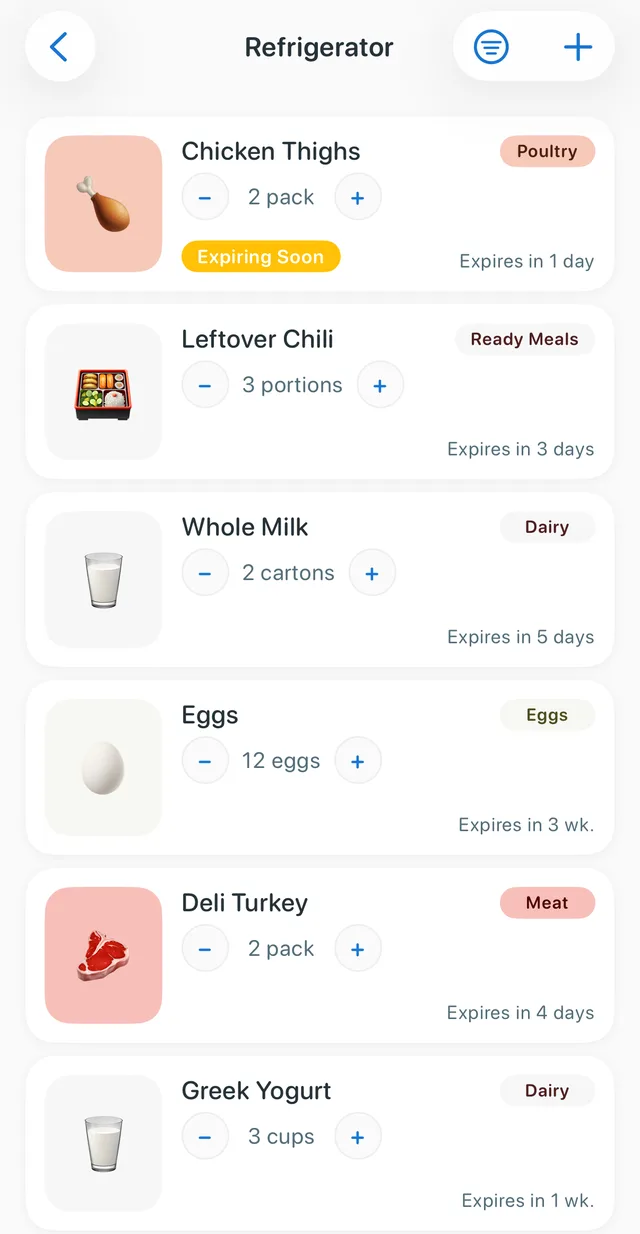
Panzy is a pantry inventory app for iPhone. Every item you add has a storage location, and Refrigerator is one of them, so the app can show you the fridge without opening the door.
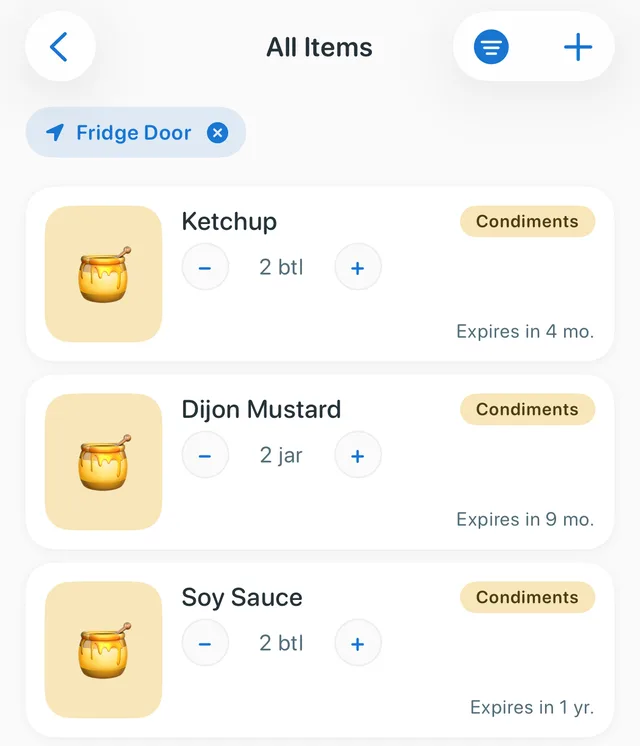
- See the fridge as its own list. Tap Refrigerator in the Locations row on the Pantry tab, or filter any item list by location, to see everything in the fridge with its quantity and how long it has left.
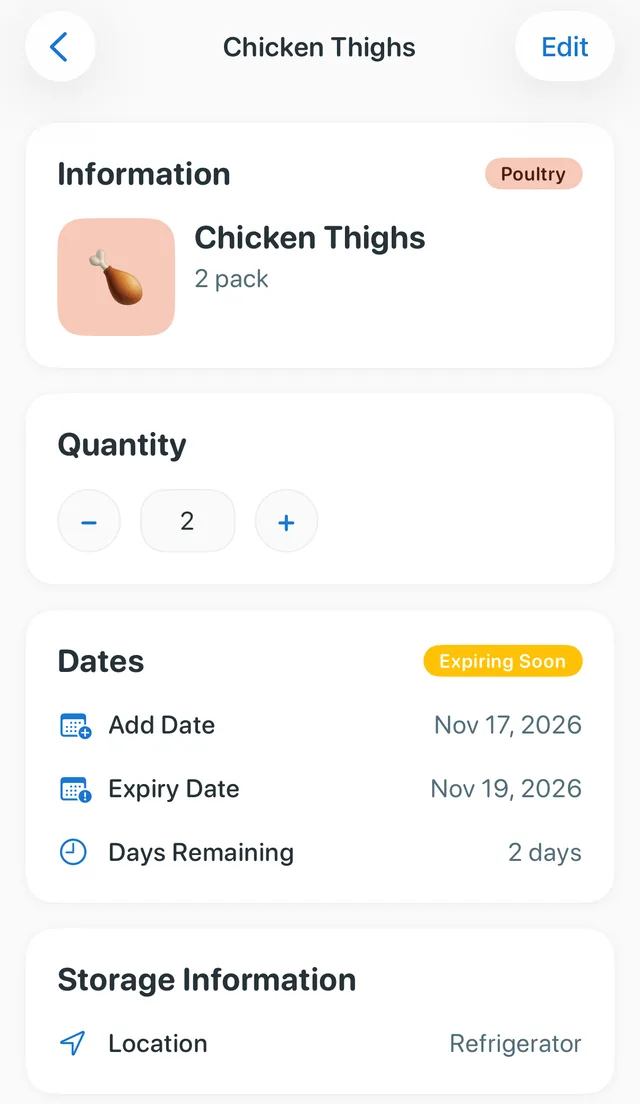
- Give short-lived food a date. Add raw chicken with an expiry date 2 days out, or leftovers with a date 4 days out. The item shows the date you added it, its expiry date and the days remaining, and gets an Expiring Soon label as the date gets close.
- Get a reminder with Panzy+. Turn on an expiry reminder for an item to get a notification a chosen number of days before its date.
- Add your own fridge zones with Panzy+. Besides the built-in locations, you can create custom ones like "Fridge Door" and "Crisper Drawer", so each item says exactly where it lives.
- Do the weekly clear-out from the list. Open the Refrigerator list, toss what's past its date, and lower the quantities as you go.
The free version tracks up to 50 items, with ads. Panzy+ adds unlimited items, custom locations, expiry reminders, the automatic shopping list, iCloud sync across your Apple devices, and no ads.
Panzy: pantry tracker
Track what's in your pantry, fridge and freezer, see what is expiring soon, and keep a shopping list that knows what you're low on. Free for up to 50 items.

Common questions
What should go on the top shelf of the fridge?
Ready-to-eat food that won't be cooked again: drinks, milk, cheese, yogurt, deli items and raw vegetables, following University of Illinois Extension's layout. Nothing raw sits above the top shelf, so nothing can drip on it.
Where should raw meat go in the fridge?
On the bottom shelf, in a sealed container or on a tray, so its juices can't drip onto other food. FSIS gives raw poultry and ground meat 1 to 2 days in the fridge, so cook or freeze it quickly.
Should eggs be kept in the fridge door?
No. FSIS says eggs should be stored in their carton on a shelf, and the FDA says to keep them in the refrigerator itself rather than on the door, where it is warmer.
Is it OK to keep milk in the fridge door?
A shelf is better. FSIS says not to store perishable foods in the door, because the temperature of the door bins fluctuates more than the rest of the fridge. Illinois Extension lists milk with the top-shelf foods.
What temperature should a fridge be?
40°F (4°C) or below, according to FSIS, the FDA and the CDC. The freezer should be at 0°F (-18°C). Use an appliance thermometer to check, since most dials don't show the actual temperature.
How often should you clean out the fridge?
FSIS recommends throwing out perishable food that should no longer be eaten once a week, and wiping up spills as soon as they happen.