Pantry Staples List: Essentials for a New Home
A new kitchen starts with empty shelves, and the first week of cooking usually means three trips to the store for things like oil, salt and a can of tomatoes. A good staples list fixes that: a short set of long-lasting basics that lets you turn a few fresh ingredients into a real meal.
Here is the full list, a smaller "buy this first" version for moving day, and how long each staple keeps.
The short version: start with a grain, a pasta, a few cans of beans and tomatoes, broth, flour, sugar, one cooking oil, one vinegar, salt, pepper and four or five spices you actually use. Add condiments and baking extras as recipes call for them. Store everything somewhere cool and dry, and put newer packages behind older ones.
The complete pantry staples list
You do not need everything on this list. Treat it as a menu: tick off what fits the way you cook, and skip the rest.
Grains, pasta and beans
- Rice (white, brown, jasmine or basmati)
- Dried pasta, one long shape and one short shape
- Rolled oats
- Dried lentils or dried beans
- Breadcrumbs or panko
- Couscous or quinoa
- Crackers
Canned and jarred goods
- Canned tomatoes (whole, chopped or crushed)
- Tomato paste
- Canned beans: chickpeas, black beans, kidney beans
- Canned tuna or salmon
- Broth or stock (cartons, cans or bouillon)
- Coconut milk
- Canned corn or another vegetable you like
- Peanut butter or another nut butter
- Jam or honey
Baking basics
- All-purpose flour
- Granulated sugar and brown sugar
- Baking soda and baking powder
- Cornstarch
- Vanilla extract
- Chocolate chips or cocoa powder, if you bake
Oils and vinegars
- A neutral cooking oil (vegetable, canola or sunflower)
- Olive oil
- White or apple cider vinegar
- A second vinegar for dressings (red wine, balsamic or rice vinegar)
- Cooking spray
Spices and seasonings
- Salt (kosher or table salt) and black pepper
- Garlic powder and onion powder
- Paprika or smoked paprika
- Ground cumin
- Chili flakes or chili powder
- Dried oregano or Italian seasoning
- Ground cinnamon
- Bay leaves
Condiments and sauces
- Soy sauce
- Ketchup
- Mustard
- Mayonnaise
- Hot sauce
- Worcestershire sauce
- Pasta sauce
Breakfast, drinks and snacks
- Coffee and tea
- Cereal or granola
- Nuts or seeds
- Popcorn kernels or a snack you keep around
Fridge and freezer staples
A pantry works best with a few cold basics next to it:
- Fridge: eggs, butter, milk or a plant milk, cheese, garlic, lemons, and onions or potatoes in a cool dark spot
- Freezer: frozen vegetables (peas, spinach, mixed vegetables), frozen fruit, bread, and a protein you cook often
What to buy first for a new home
If you are moving in this week, you do not need fifty items. These twenty cover most simple meals: pasta with tomato sauce, rice and beans, eggs on toast, a stir-fry, a soup.
| Category | Buy first |
|---|---|
| Grains | Rice, dried pasta, rolled oats |
| Cans | Canned tomatoes, two kinds of beans, broth |
| Baking | All-purpose flour, sugar, baking soda |
| Oil and vinegar | One cooking oil, one vinegar |
| Seasoning | Salt, black pepper, garlic powder, chili flakes, one dried herb |
| Condiments | Soy sauce, mustard, peanut butter |
| Freezer | One bag of frozen vegetables |
Then add one or two staples each time you shop, when a recipe calls for them. Buying the whole list at once is expensive, and anything you rarely use just sits there losing quality.
How long pantry staples keep
Shelf-stable does not mean forever. These times come from the USDA's shelf-stable food storage chart and the data behind its FoodKeeper app. "Unopened" is counted from the date you buy it.
| Staple | Unopened, in the pantry | After opening |
|---|---|---|
| White rice | 2 years | 1 year in the pantry |
| Brown rice | 1 year | 1 year in the pantry |
| Dried pasta (without egg) | 2 years | 1 year in the pantry |
| Dried beans | 1 to 2 years | 1 year in the pantry |
| Low-acid canned goods (beans, corn, soups, vegetables) | 2 to 5 years | 3 to 4 days in the fridge |
| High-acid canned goods (tomatoes, fruit, juice, pickles) | 12 to 18 months | 5 to 7 days in the fridge |
| White flour | 6 to 12 months | 6 to 8 months in the pantry, 1 year in the fridge |
| Whole wheat flour | 3 to 6 months | 6 to 8 months in the fridge |
| Granulated or brown sugar | Never spoils | Best quality within 18 to 24 months |
| Baking soda | 2 to 3 years | 6 months |
| Baking powder | 6 to 18 months | 3 to 6 months |
| Olive or vegetable oil | 6 to 12 months | 3 to 5 months in the pantry |
| Ground spices | 2 to 3 years | 2 to 3 years |
| Whole spices | 3 to 4 years | 3 to 4 years |
| Salt | Indefinitely | Indefinitely |
| Honey | 2 years | |
| Soy sauce | 3 years | |
| Commercial peanut butter | 6 to 24 months | 2 to 3 months in the pantry |
| Ketchup | 1 year | 6 months in the fridge |
| Mustard | 1 to 2 years | 1 year in the fridge |
| Mayonnaise | 3 to 6 months | 2 months in the fridge |
A few things stand out. Whole wheat flour goes stale much faster than white, so buy small bags or keep it in the fridge. Opened oil lasts months, not years. And canned tomatoes keep for a shorter time than canned beans: the USDA explains that high-acid foods like tomatoes slowly react with the can, which over several years changes their taste and texture.
The date printed on the package is a separate thing from these times. If you are not sure what "best by" or "use by" means on a jar, see Best By vs Use By vs Sell By.
How to store your staples
Cool and dry beats everything. The USDA says to keep canned and other shelf-stable food in a cool, dry place, and that temperatures below 85°F (29°C) are best. It specifically warns against storing them above or beside the stove, under the sink, in a damp garage or basement, or anywhere with temperature extremes. Heat over 100°F (38°C) is harmful to canned goods, and the risk of spoilage jumps as storage temperatures rise.
Check cans when you buy them, and again before you open them. The USDA advises against buying cans that are bulging, rusted, leaking or deeply dented. A small dent on an otherwise good can is fine. A deep dent, one you can lay your finger into, or any sharp dent on a seam, means the can goes in the trash. The FDA adds swelling, punctures and sticky residue on the outside to the list of warning signs.
Read the label on canned meat and seafood. Not every can is shelf-stable. The USDA notes that some canned hams and seafood must be refrigerated and are labeled "Keep Refrigerated".
Move opened cans into a container. Leftover canned food can go in the fridge in its can, but the USDA recommends a glass or plastic container for the best quality and flavor.
Rotate. Put new packages behind the old ones when you unpack, so the oldest gets used first. The USDA suggests checking your pantry every few weeks and using canned goods you have had for a while.
Group by type. Keep cans together, baking together and grains together, so you can see at a glance what you are low on.
How to keep your staples stocked
The point of a staples list is never running out of the basics, without buying a third bag of rice you did not need. Two habits make that work:
- Know what you have. Keep a simple inventory of your staples and where they are. Our guide to keeping track of food at home walks through a ten-minute weekly system.
- Decide when to restock. Pick a low point for each staple, like "one bag of pasta left" or "two cans of tomatoes left", and add it to the shopping list as soon as you hit it.
Panzy does both on your iPhone. Add your staples to the Pantry location (scanning the barcode fills in the product details), set a low-stock level on the ones you never want to run out of, and anything below it is flagged as Low Stock. With Panzy+, low-stock items go onto your shopping list automatically.
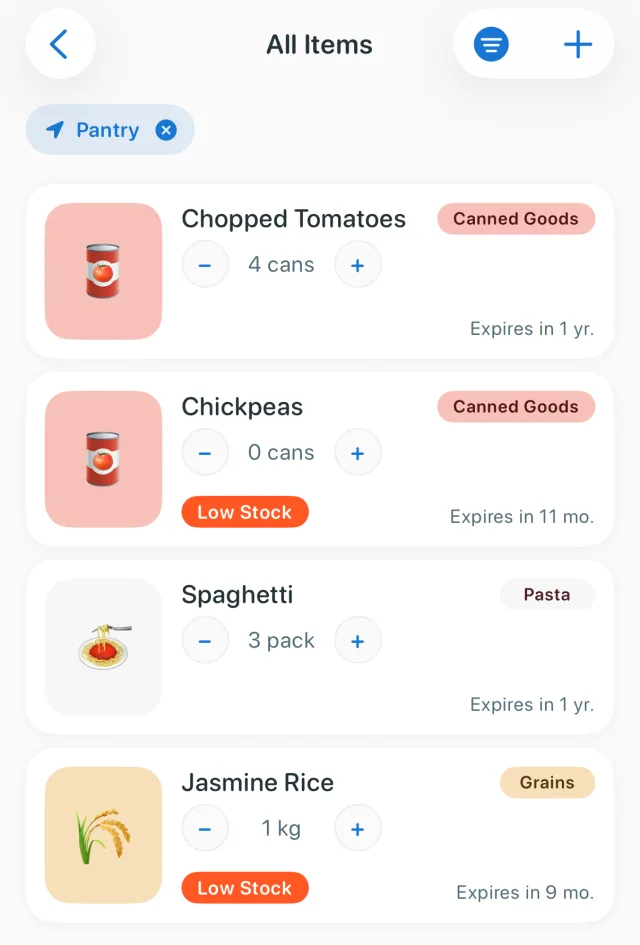
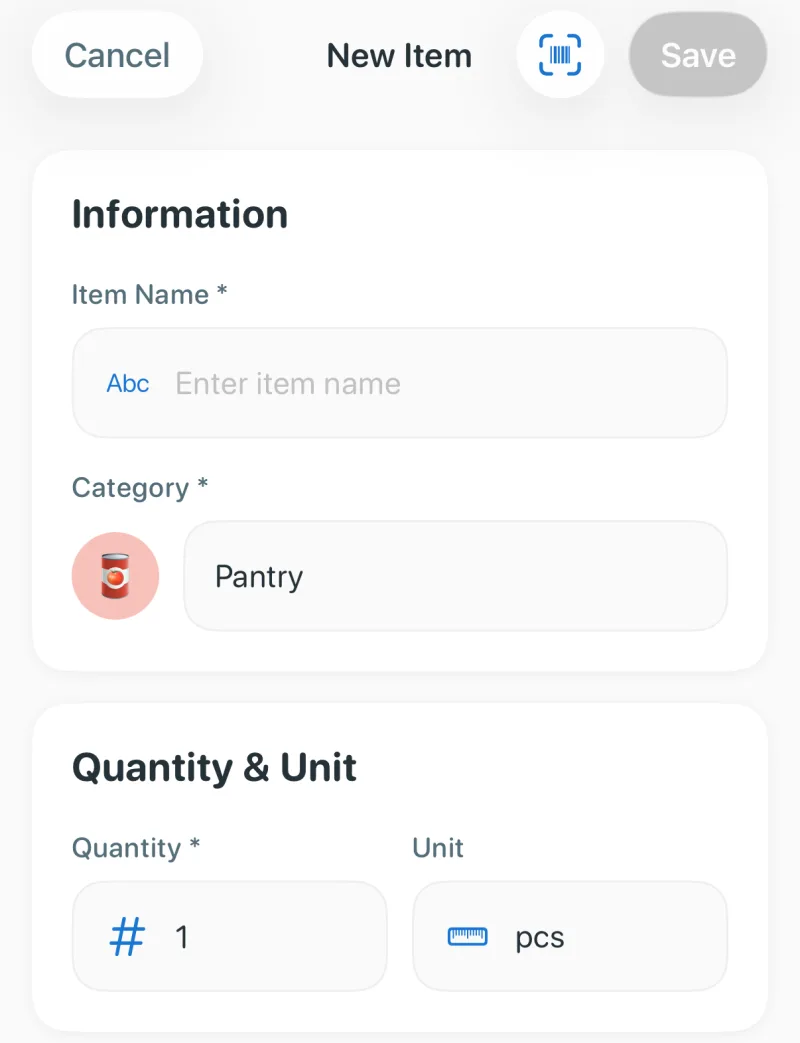
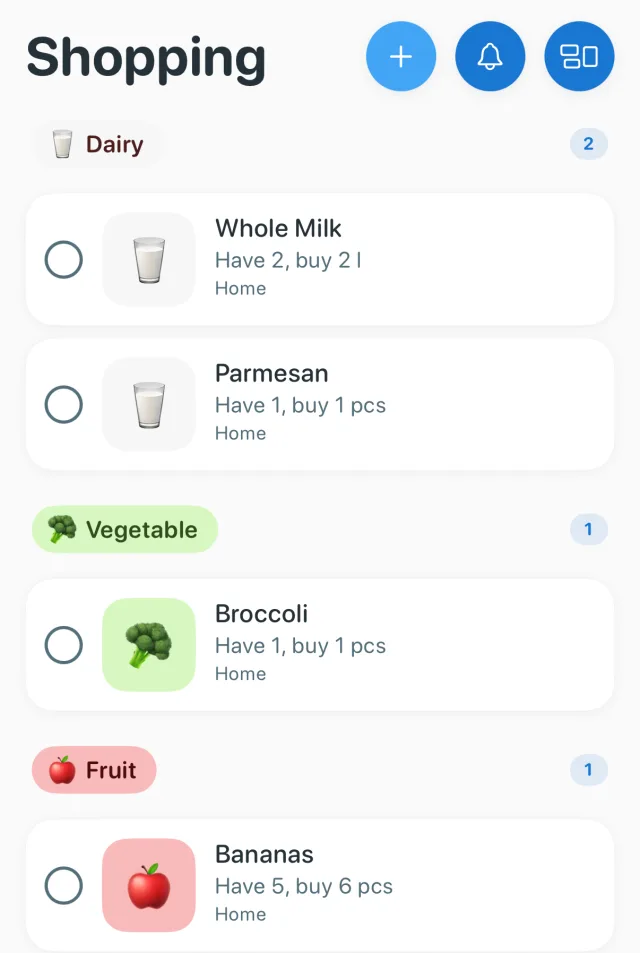
The free version tracks up to 50 items, which covers a full staples list.
Panzy: pantry tracker
Track what's in your pantry, fridge and freezer, get a reminder before food expires, and keep a shopping list that knows what you're low on. Free for up to 50 items.

Common questions
What are the most important pantry staples?
The ones that turn fresh food into a meal: rice or pasta, canned tomatoes, canned beans, broth, a cooking oil, a vinegar, flour, sugar, salt, pepper and a few spices. With those on hand you only need to buy fresh vegetables, eggs or a protein to cook dinner.
How many spices do I need to start?
Fewer than you think. Salt, black pepper, garlic powder, chili flakes, paprika, cumin and one dried herb like oregano cover a wide range of dishes. Add more when a recipe you like calls for them. Ground spices keep for 2 to 3 years according to the USDA, so small jars you will finish beat big ones you will not.
Do canned goods ever go bad?
Yes, eventually. The USDA gives high-acid canned foods like tomatoes 12 to 18 months and low-acid foods like beans and vegetables 2 to 5 years. Throw out any can that is bulging, leaking, badly rusted or deeply dented, whatever the date.
What is the difference between a pantry staple and a pantry essential?
People use the words the same way: food that keeps for months at room temperature and that you use often enough to always have on hand. A staple for one kitchen (coconut milk, rice noodles, masa harina) might never be used in another, so build your list around what you actually cook.