Best By vs Use By vs Sell By: What Food Dates Really Mean
The yogurt says "best by" last Tuesday. The chicken says "use by" tomorrow. The milk says "sell by" and you are not even sure what that one is for. Most of us end up throwing food out the day the date passes, just to be safe, and a lot of that food was perfectly fine.
Here is what each date actually means, where the rules differ by country, and how to decide what stays and what goes.
The short version: in the US, "best by", "use by" and "sell by" are about quality, not safety. The one exception is infant formula. In the UK, Australia and New Zealand, "use by" is a safety date, so do not eat food after it. "Best before" is about quality everywhere. Whatever the label says, food that looks, smells or feels off should go.
The dates at a glance
| Label | What it means | Safe after the date? |
|---|---|---|
| Best if used by / Best before | When the food is at its best flavor and quality | Usually yes, if stored properly and it shows no signs of spoilage |
| Use by (US) | The last date for peak quality | Usually yes, except on infant formula |
| Use by (UK, Australia, New Zealand) | The last date the food is safe to eat | No |
| Sell by | Tells the store how long to display it | Yes, it is not meant for you |
| Freeze by | When to freeze it to keep peak quality | It is a quality date |
| Expiration date (Canada, some special foods) | Nutrition may no longer match the label | No, throw it out |
"Best if used by" and "best before"
This is the most common date, and the one that causes the most unnecessary waste. According to the USDA Food Safety and Inspection Service, a "best if used by" date tells you when a product will be of best flavor or quality. Except for infant formula, the USDA says dates are not an indicator of a product's safety.
The USDA also says that food not showing signs of spoilage should be wholesome and may be eaten beyond its "best if used by" date. Crackers might be a little less crisp, cereal a little stale, but they are not dangerous.
The same is true in other countries. The UK government's food labelling guide says best before dates relate to quality. Food Standards Australia New Zealand says you can still eat food for a while after the best-before date, as it should be safe but may have lost some quality. And Canada's food inspection agency explains that a best before date is about freshness and shelf life of the unopened product, not a guarantee of safety.
That last point matters: once you open a package, the best before date no longer tells you much. An opened jar of pasta sauce follows the "after opening" instructions on the label, not the date on the lid.
"Use by": the date that changes meaning by country
This is where most of the confusion comes from.
In the US, the USDA defines a "use by" date as the last date recommended for use of the product while at peak quality. It is not a safety date, except on infant formula.
In the UK, Australia and New Zealand, a use-by date is about safety. The UK guide is direct: use-by dates tell you when food is no longer safe to eat, and eating food after the use-by date could make you ill. They are used on foods that go off quickly, such as meat products and ready-to-eat salads. In Australia and New Zealand, food should not be eaten after its use-by date and cannot legally be sold after it.
So if you shop in the UK or Australia, treat "use by" as a hard stop. If you are in the US, a "use by" date on most foods is a strong hint about quality, and your own senses do the rest.
One useful rule from the UK guidance: you can still eat food after its use-by date if it was frozen or cooked on or before that date. Cooked food should be cooled, kept in the fridge and eaten within 48 hours, or frozen.
"Sell by"
A "sell by" date is for the store, not for you. The USDA says it tells the store how long to display the product for sale, for inventory management. Food is often good for some time after its sell-by date, as long as it has been stored properly.
"Freeze by"
A "freeze by" date tells you when to freeze a product to keep it at peak quality. Like the others in the US, it is about quality. If you know you will not use something in time, freeze it before this date.
Expiration dates and infant formula
Two cases where a date really is a deadline:
- Infant formula. In the US it is the one product where dating is required by federal regulations, and the USDA notes that the use-by date on formula is a safety date. Do not use formula after it.
- "Expiration date" in Canada. Canada uses expiration dates only on certain foods with strict nutritional specifications, such as infant formula, meal replacements and nutritional supplements. After the date the food may no longer contain what the label says, and the CFIA says it should not be bought, sold or eaten.
How to tell if food is still good
The USDA puts it simply: the quality of perishable products may deteriorate after the date passes, but they should still be safe if handled properly, and you need to check the food for signs of spoilage before you eat it.
Check these, in this order:
- Storage. Has it been kept cold the whole time? The FDA recommends a fridge at or below 40°F (4°C) and a freezer at 0°F (-18°C). Food left out too long can be unsafe before any date.
- Look. Mold, slime, discoloration or bulging cans mean it goes.
- Smell. Sour, off or simply "wrong" smells mean it goes.
- Texture. Unexpected stickiness on meat, or a curdled texture in milk, means it goes.
When in doubt, throw it out. The goal is to stop wasting good food, not to take chances with food that is clearly off.
For specific foods, the USDA's free FoodKeeper app gives storage times for hundreds of items. Eggs are a good example: the USDA's storage chart gives raw eggs in the shell 3 to 5 weeks in the fridge, which is often well past the date on the carton.
How to stop dates from sneaking up on you
The problem is rarely misreading a date. It is not seeing the date until it is too late. A few habits help:
- First in, first out. Put new groceries behind older ones so the oldest food gets used first.
- Keep a "use first" spot in the fridge for anything near its date.
- Freeze before the date, not after, if you will not get to something in time.
- Write dates on food that has none: leftovers, opened sauces, freezer bags.
- Track the dates somewhere you will see them before you shop and before you cook.
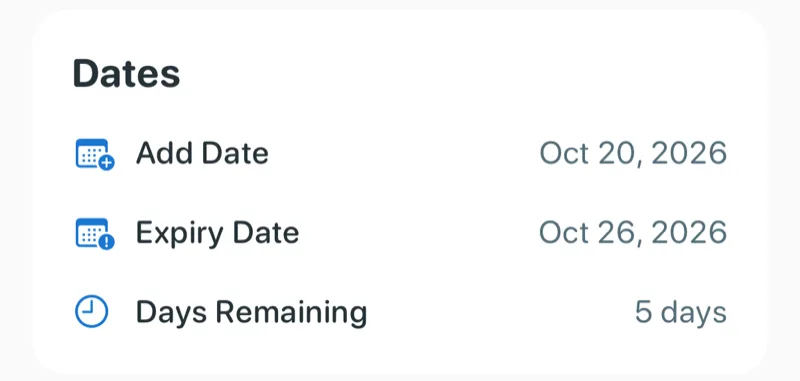
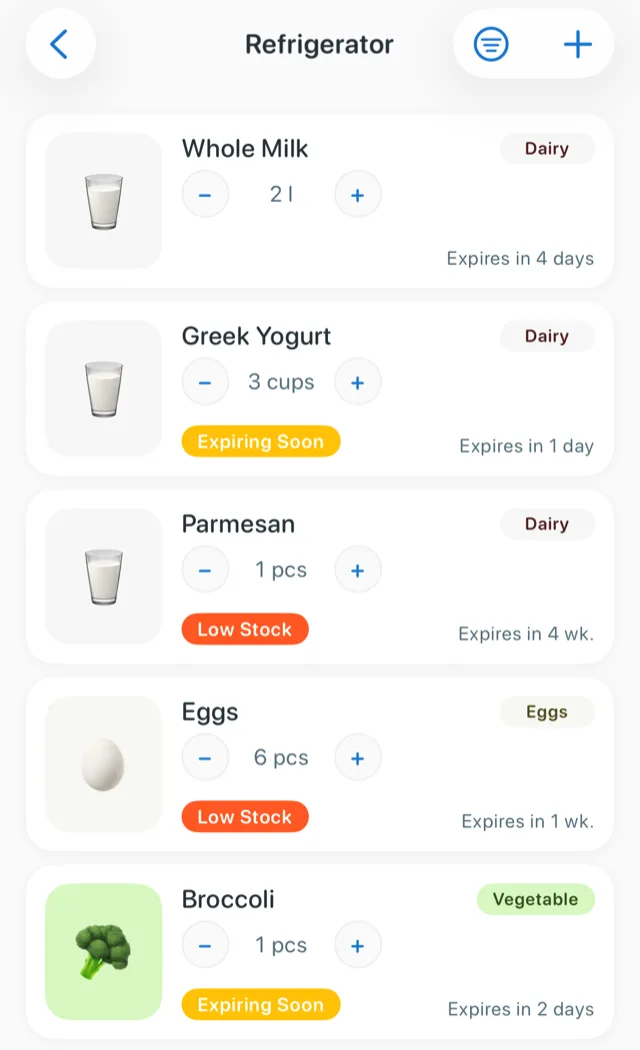
That last one is what Panzy is for. You add an item once, with its expiry date, and Panzy shows how many days are left, labels items that are expiring soon, and sends a reminder a set number of days before the date, so the yogurt gets eaten on Monday instead of found on Friday.
Panzy: pantry tracker
Track what's in your pantry, fridge and freezer, get a reminder before food expires, and keep a shopping list that knows what you're low on. Free for up to 50 items.

Common questions
Is it safe to eat food after the "best by" date?
Usually, yes. The USDA says food that shows no signs of spoilage should be wholesome and may be eaten after its "best if used by" date, as long as it was stored properly. Quality may be a little lower.
Can you eat food after the "use by" date?
In the US, "use by" on most foods is a quality date, so check the food before you eat it. The exception is infant formula: do not use it after the date. In the UK, Australia and New Zealand, "use by" is a safety date, so do not eat food after it unless you froze or cooked it on or before that date.
What does "sell by" mean on milk?
It tells the store how long to display the milk. It is not a safety date. Milk that has been kept cold is often fine for some time after it. Smell and look before you pour.
Does freezing stop the clock?
Freezing at 0°F (-18°C) keeps food safe, and the UK guidance says bacteria cannot grow on frozen food. Quality still slowly declines, so label frozen food with the date you froze it and use the oldest first.